
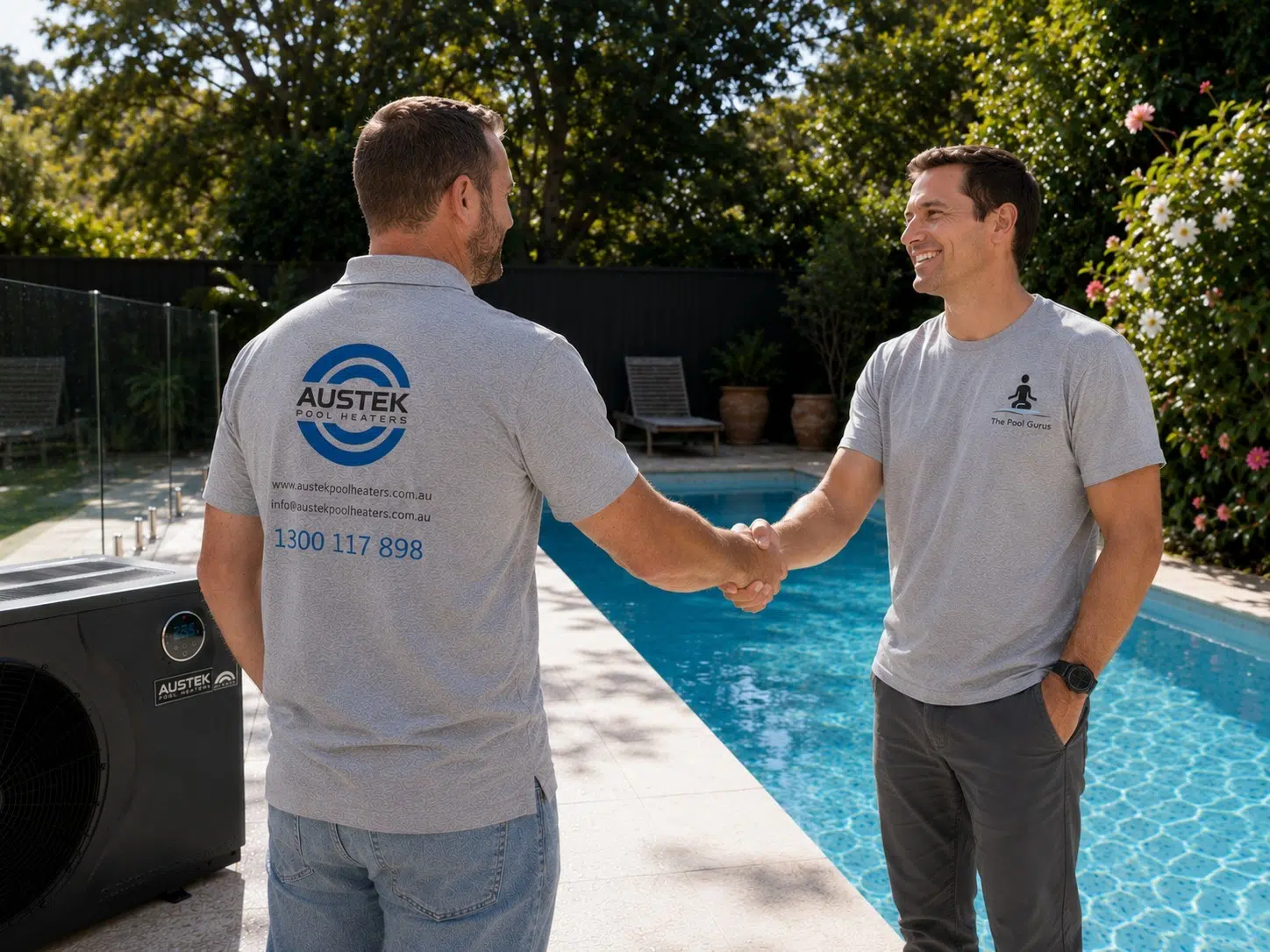
Choosing the right size pool heat pump is one of the most important decisions you'll make when heating your swimming pool. Many homeowners assume that a larger unit will cost more to run, while others choose the smallest model to save money upfront. In reality, neither approach is ideal.
At Austek, we've worked with homeowners, pool builders and installers across Australia who all ask the same question: "What size pool heat pump do I need?"
The answer depends on much more than the size of your pool. Factors such as your location, swimming season, pool cover and local climate all play an important role in selecting the right heat pump. This guide explains how pool heat pumps are sized, the common mistakes to avoid and how to choose a system that delivers reliable performance and efficient operation for years to come.
Why Correct Sizing Matters
A correctly sized pool heat pump will:
- Heat your pool faster.
- Maintain a consistent swimming temperature.
- Operate more efficiently.
- Reduce wear on major components.
- Lower long-term running costs.
An undersized unit may struggle to reach your desired temperature, particularly during cooler months, while an oversized unit may increase the initial purchase price without providing additional benefits for some applications.
Pool Volume Is Only the Starting Point
The amount of water in your pool is the first step when selecting a heat pump, but it should never be the only consideration.
As a general guide:
- 20,000 litres - Small plunge pool
- 40,000 litres - Average family pool
- 60,000 litres - Large residential pool
- 80,000+ litres - Premium residential or commercial pool
Professional pool heating companies also consider several other important factors before recommending a heat pump.
Your Location Matters
Australia's climate varies considerably from region to region. For example, a pool in Brisbane may only require heating during the shoulder seasons, while the same pool in Melbourne or Canberra may require considerably more heating to maintain the same water temperature. Local temperatures, wind exposure and overnight heat loss all influence the size of the heat pump required.
Do You Use a Pool Cover?
A quality pool cover is one of the best investments you can make. Most heat is lost through evaporation, particularly overnight.
Using a pool cover helps retain heat, reduce evaporation and improve the overall efficiency of your heating system. In many cases, it can also reduce the amount of heating required throughout the swimming season.
When Do You Want to Swim?
Think about how you plan to use your pool.
- Summer only
- Spring and autumn
- Almost all year round
The longer you want to enjoy your pool, the more heating capacity you will generally require.
Wind Exposure
Wind is one of the biggest causes of heat loss in swimming pools. Pools located on exposed properties, rural areas or waterfront homes often require more heating capacity than sheltered backyard pools.
Pool and Spa Combinations
If your swimming pool and spa share the same heating system, this should always be considered when selecting a heat pump. Spas typically operate at much higher temperatures and require additional heating capacity.
Full Inverter Technology Makes a Difference
Modern inverter pool heat pumps operate very differently from older fixed-speed systems. Instead of constantly switching on and off, full inverter technology automatically adjusts compressor and fan speed to match the heating demand.
This provides several important benefits:
- Lower electricity consumption.
- More consistent water temperatures.
- Quieter operation.
- Reduced wear on components.
- Improved long-term efficiency.
Because inverter heat pumps automatically reduce their output once the desired temperature is reached, they provide efficient performance throughout the swimming season.
Is a Larger Heat Pump More Expensive to Run?
Not necessarily. This is one of the biggest misconceptions about pool heating. A correctly selected inverter heat pump doesn't simply operate at full power all the time. Once your pool reaches the desired temperature, it automatically reduces its output and only uses the energy required to maintain that temperature. In many situations, a slightly larger inverter heat pump can actually operate more efficiently than an undersized unit that needs to run continuously.
Five Common Sizing Mistakes, The most common mistakes we see include:
- Buying the cheapest unit available.
- Selecting a heat pump based only on pool volume.
- Ignoring local climate.
- Heating a pool without using a pool cover.
- Choosing a system without seeking professional advice.
Avoiding these mistakes will help improve comfort, efficiency and long-term reliability.
Austek Tip
Choosing the correct pool heat pump is about much more than litres of water. At Austek, we consider your pool size, location, desired swimming season, wind exposure and whether you use a pool cover before recommending the most suitable model. That's why we recommend using our Pool Heat Pump Calculator or speaking with one of our authorised dealers before making your final decision.
Quick Links -
Frequently Asked Questions
Can a pool heat pump be too small? - Yes. An undersized heat pump may struggle to maintain the desired water temperature, particularly during cooler weather or extended swimming seasons.
Can a pool heat pump be too large? - Modern inverter heat pumps automatically adjust their output to suit demand, making them much more flexible than older fixed-speed systems.
Does a pool cover reduce heating requirements? - Yes. A quality pool cover significantly reduces heat loss through evaporation, improving efficiency and reducing running costs.
Is pool volume the only factor when selecting a heat pump? - No. Pool size is only one part of the equation. Climate, wind exposure, swimming season and pool covers all influence the correct heat pump selection.
Final Thoughts
Choosing the right size pool heat pump is one of the most important decisions you'll make when investing in pool heating. By considering factors such as pool volume, climate, pool covers and swimming season, you'll enjoy better heating performance, lower operating costs and greater long-term reliability. If you're unsure which model is right for your pool, the Austek Pool Heat Pump Calculator and our nationwide dealer network can help you select the ideal heating solution.
